Belgique Cookware Reviews: Is Belgique Cookware Worth Buying? Complete Guide, Pros, Cons, and Real-World Uses
belgique cookware reviews
When shopping for quality cookware, many home cooks encounter the Belgique brand. Known for its elegant design and affordable pricing, Belgique cookware has become a popular choice for individuals seeking reliable pots and pans without spending a fortune.
This comprehensive guide explores Belgique Cookware reviews, key features, benefits, drawbacks, real-world applications, and whether the cookware deserves a place in your kitchen. We will also discuss cooking healthy vegetables such as the rutabaga vegetable, demonstrating how Belgique cookware performs when preparing nutritious meals.
What Is Belgique Cookware?
Belgique cookware is a kitchenware line designed to provide dependable cooking performance at a reasonable price point. The brand offers various cookware collections, including:
- Stainless steel cookware
- Nonstick cookware
- Stockpots
- Saucepans
- Frying pans
- Dutch ovens
- Multi-piece cookware sets
Many consumers appreciate Belgique products because they combine attractive aesthetics with practical functionality for everyday cooking.
Why Is Belgique Cookware Popular?
Several factors contribute to the popularity of Belgique cookware:
Affordable Pricing
One of the biggest advantages is affordability. Many cookware brands charge premium prices, while Belgique provides a budget-friendly alternative without sacrificing basic performance.
Attractive Design
Belgique cookware often features:
- Polished stainless-steel finishes
- Modern handles
- Elegant lids
- Professional-looking construction
These design elements make the cookware suitable for both cooking and serving.
Versatile Usage
Most Belgique cookware pieces can handle:
- Boiling
- Simmering
- Frying
- Sautéing
- Braising
- Steaming
This versatility appeals to both beginner and experienced home cooks.
Belgique Cookware Reviews – The Top 5 Pieces
| Product Name | Quality | Price | Our Rating |
|---|---|---|---|
| Belgique Nonstick Aluminum Red 12 Piece Cookware Set | A+ | $$ | |
| Belgique Hard-Anodized Aluminum 12-Pc. Nonstick Cookware Set | A | $ | |
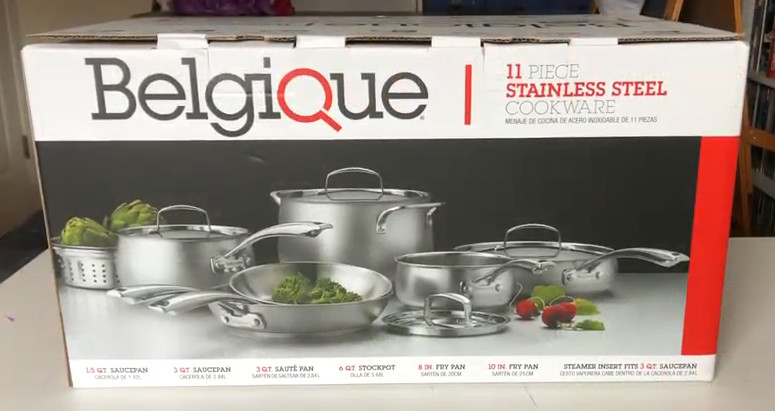
| Belgique Stainless Steel Cookware, 11 Piece Set | A | $$ | |
| Belgique Hard Anodized 3 Qt. Covered Soup Pot | B+ | $$ | |
| Belgique Copper Soup Pot With Lid, 3 Quart | B | $ |
The Advantage of Using a Belgique Cookware
If you’re health conscious, have kids or elderly in your family, you will be more keen to cook hygienic food, and that’s quite possible with the best nonstick cooker.
Or, if you’re a working women, you may be looking for a utensil that doesn’t require too much time in cleaning.
Well, there may be other concerns, but belgique cookware has answers for all of them.
There are lots and lots of benefits of using belgique cookware set. Some of them will be unleashed as you learn to use them, but here are some really important ones that indicate how efficient and convenient these appliances are.
- Less oil/fat consumption: You must be aware that other types of pots and pans require extra oil at the base and sides, so that the cooked food should not stick. Well, that’s certainly not the case with belgique cookware. That means, belgique cookware will reduce your oil or fat consumption significantly.
- Less time in cleaning: In connection to the above mentioned point, you can imagine how cumbersome it is to clean a pot with oil and fat. Or if you forgot to pour oil before cooking, brace yourself to fight with stubborn food particles and use some elbow grease to remove. Nonstick pots and pans are fairly easier to clean, takes less water and saves time.
- Smooth flow: As you cook the food, it needs stirring from time to time. Other cooking pots, especially metallic pots develop scratches and rough spots at the base, due to which stirring can be slow and unsmooth. Nonstick pots have no such trouble, because of the thick layers of polymer coating.
- Long life: You can keep them for long if you use plastic or wooden spoons. Metallic tools can scratch off the PTFE coating if you kept using them for long.
- Better for gravy: Nonstick pots and pans have been recommended by Tony Polombo, a seasoned writer, for preparing stews and gravy items. Since they’re nonstick, they produce more gravy by adding the fond (caramelized dripping from the cooked meat that can stick to ordinary pan). The nonstick pot can help deglaze the fond and dissolve it into the liquid.
Belgique Cookware Buyer’s Guide

Now, that you know what makes a good belgique cookware, you’re all set to buy the right pieces for your kitchen. Here are few things you need to consider while choosing the best belgique cookware set.
- Cooktop: first and foremost, you need to see the bottom of the pans and pots in the set. If you have smoothtop range, pans need to have flat bottoms. Even if all the pans have flat bottoms, you can double check using a straight edge. If your cooktop works with induction heating, you need to choose magnetic stainless steel for better and smoother performance.
- Be careful while choosing pieces: So, you’re looking for different sizes of skillets, pans, stockpots and lids. If you’re purchasing for the first time, keep in mind that manufacturers count every single item as a piece. Cooking pan is a separate piece and its lid is a separate piece. A single lid can fit on more than one piece so, don’t care too much about getting a separate lid for all bowls and pans. Similarly, stirring utensils, note book and instructions manual will be counted as pieces. The more pieces you have the more space it will occupy, and soon you’ll realize that apart from two or three pieces, rest are useless.
- Have a Feel: You may be interested in buying nonstick cookware online, but if it is possible for you to visit a nearby retail shop and physically examine a few pieces, that will help you in making the right purchase decision. After removing your doubts, you can always go to amazon.com, find the cookware and purchase.
It is very important to handle a cookware before purchase, because you need to ascertain it feels not too heavy or not too light in your hands.
You can then imagine how it might feel when it’s completely packed with food. Also see, whether the pan has a durable and handle and how it is attached.
Handle must be tightly attached to the pan and must be in balance.
If you cannot find a place to physically examine the pans, you can take help with nonstick cookware reviews and FAQs available online.
- Understand the terms: Understanding certain terms is vital, and can actually save you from spending extravagantly on the cookware. Cast iron cookware normally has a label “pre-seasoned”. It means that the nonstick pan was coated with wax, to prevent rust on the metal. Then there are some pans that need pre-seasoning before use. So, take a look at the manufacturer’s manual before use.
Don’t fancy hard-coated anodized aluminium too much, because it’s a soft aluminium changed into hard surface, and it has nothing to do with nonstick coating.
Another term “Clad” has been used with many cookware items. It merely means that the nonstick pot is made with different metal pieces fused in one place.
So, the pot may have an outer and inner lawyer of stainless steel, but the middle (the core) layer is made of aluminium or copper, or may be a conductive magnet.
Clad is also used to describe a material that has been attached to the bottom of the pot, to speed up heat transfer.
Another term, that may confuse you is, “Oven safe”. It means that all or few of the items can be used in ovens for cooking food.
If a piece is labeled oven safe, make sure it’s handles are made of metal. Silicone handles can withstand a certain temperature too. Do not put the pan inside the oven if it has plastic or wood handles.
Belgique Cookware: What to Look For
If you are searching for the best nonstick cookware and are not sure which one’s best for you, following are some things you need to consider before making your decision.
Regardless what you’re buying; a single piece or a whole cookware set, the major things you need to keep in mind pertain with the weight, metal type, smooth cooking, oven-safety and other related essentials.
So, let’s take a look at these factors in detail.
1. Weight of the pan
Weight is always a tough act to balance. Heavier pans are good for cooking because the surface of the fan allows for even heating.
At the same time, they’re harder to clean, and handling also needs effort. On the other hand, light pans and pots have less even surface for cooking, but they are more convenient when it comes to cleaning and handling.
So, a mid-weight cookware set would be an ideal choice. If you’re purchasing one piece than, you can buy a heavy weight item, because it will be more durable. Heavy item are expensive compared to mid-weight or lightweight pans.
2. Material and Durability
Metal durability is quite important in a cookware set as it is directly related to the life-span and investment.
There are different kinds of metals for belgique cookware, and stainless steel, copper, anodized aluminium and cast iron are the most common ones.
- Cast Iron: When it comes to durability and feel, cast iron tops the list of metals. It’s also the heaviest material for pots and pans which also makes it difficult to clean and care. Unless cast iron has a proper coating, you need to put a lot of oil to cook something in a cast iron pan.
- Anodized Aluminium: Anodized aluminium is the second hardest material. The material is fairly easy to clean; is less expensive and has less weight than cast iron. But if you’re using uncoated aluminium pan, the food will soak up some of the metal while cooking, because aluminium is a reactive substance.
- Copper: Copper is an excellent material for pans and pots, because it has a tendency to adjust quickly to the heat changes. The heat will be distributed evenly throughout the utensil. But the metal is very expensive and also needs high maintenance cost. Most of the old utensils of copper are lined with stainless steel, and they have tin coating from the inside.
- Stainless Steel: If you want to have a fresh start in the kitchen, stainless steel cookware will give you the best one. This material is high on demand because of durability, performance and reasonable price range. Aluminium cookware with stainless steel clad on it, is highly recommended for nonstick cooking. They may be a little expensive, but performance-wise, they’re far better than those pans that have aluminium disk attached at the bottom.
3. Induction Compatible
Nowadays, induction burners and stoves are in demand. This type of heating is popular in the United States, Europe and Asia. Instead of copper coils used in electric stoves, Induction heating follows an electrical-magnetic process that transfers heat to the bottom of the utensil.
So, the cookware should have a little amount of iron; either an additional disk or coating on the outside, to be able to qualify as induction compatible cookware.
4. Oven Safety
People often buy skillets, saucepans and pots to use them on stovetop, but if you can use nonstick cookware in an oven, it’s an excellent capability.
So, if you’re getting one at a reasonable price, that’ll be a bonus. Remember, oven-safe cookware have metal handles, not the ones made of plastic or wood.
5. Lids
Different kinds of materials are available in the lids’ department, but glass lid has been more popular than any other material.
What’s more important is, the lid should fit the top of the pan, and when needed, it can be removed easily too.
6. Handles
Do you know, you can judge the quality of the cookware, just by looking at the quality of the handle? Well, that’s not the true gauging criteria, but most of the time it works.
The reason is, a low-end cookware brand would ideally choose low-quality handles and lids for cost-saving. And also, handle may be the first thing in the pan that can get you in trouble. So, what should you do?
The handle must be solidly attached to the pan and should be made of metal. Metal handle will add convenience to use the utensil on the stovetop, as well as in the oven.
At the same time, do not touch the hot metal handles without wearing protection. Or you can choose a pan that have metal handles and rubber guards on it. This allows you to detach the rubber guard when putting the pan in the oven.
7. Warranty
Who wouldn’t want value of the money spent on nonstick cookware? So, if you’re getting a product with a warranty, that’s the benefit.
Manufacturers often provide limited warranty for a year, two-year, while some cookware have a lifetime warranty.
So, always ask for the warranty as it secures your purchase. Moreover, to claim the warranty, you need to meet and comply with all the instructions stated in the manufacturer’s manual.
How to Use Belgique Cookware Safely
Nonstick cookware set is always a good option to be had in the kitchen, but pros and chefs recommend they should be used complementary to the traditional (uncoated pots and pans).
Anyhow, if you’re one of those who are not in favor of this particular cookware because of bad publicity, correct your facts, because nonstick cookware complies with rules set by the environment protection agency.
In 2015, the agency confirmed that nonstick cookware do not have any PFOA concerns, as the chemical is completely consumed during the manufacturing process of the cookware.
Manufacturers and experts have come up with some handy tips to use nonstick cookware safely and efficiently. The cookware will also remain in good condition for years.
- Using First Time: According to manufacturers like Calphalon, when you use your nonstick set for the first time, apply a thin coating of vegetable oil on the cooking surface. In this way, the cooking surface will be conditioned and remain protected for long.
- Preheating an Empty Pot: Unlike ordinary pans, nonstick pans should not be preheated. This is due to the material of the cookware. Normally aluminium is the core material of nonstick pots, and it heats up quickly because of the low density and less weight.
- If Preheat is Necessary: Add some oil that lightly covers the cooking surface. Preheat the utensil for just a few seconds, then add food in it.
- Nonstick Spray: Instead of using nonstick cooking spray, you can use grapeseed oil or vegetable oil to condition the pan. That’s because, lecithin present in nonstick cooking spray will make the cooking surface less nonstick and more gummy.
- Cook on Moderate Heat: Low to medium heat is preferable for nonstick cookware. High amount of heat degrades the coating. Some coatings, on high heat, generate toxin vapors and cause health issues.
- Oven-friendliness: You need to check the product manual, in order to understand whether your cookware is suitable for ovens or not. If it is, then check the maximum temperature it can bare. Oven-safe cookware are also available in the market, but most brands don’t offer such utensils.
What to Avoid
There are a few good reasons for it.
- Don’t Use on Extremely Hot Burner: Nonstick utensils cannot withstand excessive heat, but stainless steel cookware can. That means, if you’re cooking something at a temperature of over 660oF, do not use a coated appliance. Make sure that the burner is not too hot before placing the appliance on it. Avoid using it on the broiler. It will not only deteriorate, it can cause polymer fume fever.
- Metal Spoons Should be avoided: As said before, metal utensils are not meant for nonstick pans and pots. They have sharp edges that can scratch the coating, and there are more chances of it when the pot is being heated.
- Replace Immediately: Even if it belongs to the best ceramic cookware, the nonstick utensil MUST be replaced as soon as it shows signs of deterioration. Scratches and patches will only increase your problems.
- Ensure safety: While cooking, keep your kids and pets away. Most people leave damage pots and pans for birds and pets (for feeding), but don’t take risk with damaged ceramic pots. The removed coating can be lethal for birds.
Maintaining your nonstick cookware set is not as difficult as for ordinary cookware. If you follow these tips, you can easily use the nonstick cookware set for at least 3 years.
- Apart from warm water and dish washing detergent, make sure that the sponge is non-abrasive. You can use a soft dishrag for cleaning. Abrasive cleaners that have hard and rough surfaces are bad for your utensil. Don’t use steel wool at all.
- If the food gets stuck somewhere on the pan’s surface, scrub it off with the help of baking soda and water. There are some other non-abrasive cleaners, such as soft scrubs or Bon Ami.
- Most of the time, you come across a cookware that’s known to be dishwasher safe. Even if your ceramic cookware is safe for dishwashing material, try to wash it with hand as much as possible. If the water is too hot or the detergent is too harsh, the surface of the cookware will corrode easily.
- Avoid stacking nonstick pans and pots, because this may result in scratching or chipping. However, if you don’t have too much space, you can stack your cookware by putting a thin towel between two utensils.
Key Features of Belgique Cookware
1. Stainless Steel Construction
Many Belgique cookware collections use stainless steel construction, which offers:
- Corrosion resistance
- Durability
- Easy maintenance
- Long lifespan
Stainless steel is also non-reactive, making it suitable for acidic ingredients such as tomatoes, lemon juice, and vinegar.
2. Encapsulated Aluminum Core
Several Belgique cookware products include aluminum cores sandwiched between stainless steel layers.
Benefits include:
- Faster heating
- Better heat distribution
- Reduced hot spots
- Improved cooking consistency
3. Tempered Glass Lids
Many cookware sets feature tempered glass lids that allow users to monitor food without releasing heat.
Advantages include:
- Energy efficiency
- Better moisture retention
- Easier cooking control
4. Comfortable Handles
Ergonomic handles help improve safety and comfort during cooking.
Users often appreciate:
- Secure grip
- Heat resistance
- Balanced weight distribution
Belgique Cookware Reviews: Performance Analysis
Heat Distribution
One of the most frequently praised aspects of Belgique cookware is its even heating performance.
Users report good results when cooking:
- Eggs
- Pasta
- Rice
- Soups
- Stews
- Vegetables
The aluminum core helps eliminate uneven cooking and reduces the likelihood of burning food.
Cooking Efficiency
Belgique cookware performs particularly well for:
- Medium-heat cooking
- Daily meal preparation
- Family dinners
- One-pot recipes
While it may not compete with premium professional cookware, it offers excellent value for average households.
Durability
Most Belgique cookware collections demonstrate respectable durability when properly maintained.
Proper care includes:
- Avoiding metal utensils on nonstick surfaces
- Hand washing when possible
- Avoiding extreme temperature changes
With good maintenance, many users report years of reliable service.
Pros of Belgique Cookware
1. Budget-Friendly
One of the strongest selling points is affordability.
Benefits include:
- Lower upfront investment
- Good value for money
- Suitable for first kitchens
2. Attractive Appearance
Belgique cookware looks more expensive than its price suggests.
Features include:
- Sleek stainless finishes
- Modern aesthetics
- Professional appearance
3. Easy to Clean
Most cookware pieces are relatively easy to clean.
Advantages:
- Minimal food sticking
- Simple maintenance
- Convenient daily use
4. Good Heat Retention
The cookware retains heat reasonably well, helping reduce energy consumption and maintain cooking consistency.
5. Multiple Size Options
Users can choose from:
- Small saucepans
- Medium pots
- Large stockpots
- Complete cookware sets
Cons of Belgique Cookware
1. Not Professional Grade
While excellent for home use, Belgique cookware is not generally considered professional restaurant-grade equipment.
2. Some Nonstick Coatings Wear Over Time
Like most nonstick cookware, coating longevity depends heavily on usage and maintenance.
Improper care may lead to:
- Scratches
- Reduced nonstick performance
- Earlier replacement
3. Heat Handles Carefully
Some users report handles becoming warm during extended cooking sessions.
Using oven mitts is recommended.
4. Limited Premium Features
Compared to luxury cookware brands, Belgique may lack:
- Fully clad construction
- Advanced coatings
- Lifetime durability expectations
Direct Uses of Belgique Cookware
Everyday Breakfasts
Ideal for preparing:
- Eggs
- Pancakes
- Oatmeal
- Breakfast potatoes
Soups and Stews
Stockpots and Dutch ovens work well for:
- Chicken soup
- Vegetable soup
- Beef stew
- Chili
Pasta Dishes
Belgique cookware efficiently handles:
- Boiling water
- Cooking pasta
- Preparing sauces
Vegetable Cooking
The cookware performs well when preparing healthy vegetables, including the nutritious rutabaga vegetable.
Cooking Rutabaga Vegetable with Belgique Cookware
What Is Rutabaga Vegetable?
The rutabaga vegetable is a root vegetable that combines characteristics of turnips and cabbage.
Nutritional benefits include:
- High fiber content
- Vitamin C
- Potassium
- Antioxidants
Many health-conscious cooks enjoy rutabaga because it offers a slightly sweet, earthy flavor while remaining low in calories.
Why Belgique Cookware Works Well for Rutabaga
Preparing rutabaga often involves:
- Boiling
- Roasting
- Mashing
- Steaming
Belgique cookware’s even heat distribution helps ensure the vegetable cooks thoroughly without uneven softening.
Simple Rutabaga Mash Recipe
Ingredients:
- 2 large rutabagas
- 2 tablespoons butter
- Salt
- Pepper
Instructions:
- Peel and cube rutabaga.
- Add to a Belgique stockpot.
- Cover with water.
- Boil until tender.
- Drain and mash.
- Add butter, salt, and pepper.
The result is a healthy side dish that pairs perfectly with meats and vegetarian meals.
Belgique Cookware vs Other Brands
Belgique vs Cuisinart
Belgique Advantages
- Lower cost
- Attractive design
- Good value
Cuisinart Advantages
- More premium construction
- Wider product selection
- Greater long-term durability
Belgique vs T-fal
Belgique Strengths
- Better stainless-steel options
- Elegant appearance
T-fal Strengths
- Advanced nonstick technology
- Lightweight designs
Belgique vs Calphalon
Belgique Strengths
- More affordable
- Beginner-friendly
Calphalon Strengths
- Professional-grade performance
- Superior materials
Who Should Buy Belgique Cookware?
Belgique cookware is ideal for:
Beginner Cooks
New cooks appreciate:
- Affordable pricing
- Ease of use
- Versatility
Families
The cookware handles large meals efficiently while staying within budget.
Budget-Conscious Shoppers
Those seeking reliable cookware without premium pricing often find Belgique an excellent compromise.
Maintenance Tips
To maximize cookware lifespan:
Use Wooden or Silicone Utensils
This helps protect cooking surfaces and reduce scratches.
Avoid Overheating
Excessive heat can damage coatings and reduce performance.
Clean Properly
- Allow cookware to cool before washing.
- Avoid abrasive scrubbers whenever possible.
Store Carefully
Stack cookware with protective liners to prevent scratching.
Frequently Asked Questions
Is Belgique Cookware Safe?
Yes. Belgique cookware is generally considered safe when used according to manufacturer instructions.
Is Belgique Cookware Dishwasher Safe?
Many products are dishwasher safe, but hand washing often helps preserve appearance and longevity.
Does Belgique Cookware Work on Induction Cooktops?
Some collections are induction-compatible, while others are not. Always verify product specifications before purchasing.
How Long Does Belgique Cookware Last?
With proper maintenance, many users enjoy several years of reliable performance.
Final Verdict: Is Belgique Cookware Worth It?
After examining numerous Belgique Cookware reviews, the brand emerges as a strong choice for home cooks seeking affordability, functionality, and attractive design.
While it may not offer the premium craftsmanship of high-end cookware brands, Belgique delivers dependable performance for everyday cooking tasks. From preparing soups and pasta to healthy dishes featuring nutrient-rich vegetables such as rutabaga, the cookware handles most kitchen responsibilities effectively.
Quick Summary
Pros
- Affordable
- Attractive appearance
- Good heat distribution
- Easy cleaning
- Versatile usage
Cons
- Not professional-grade
- Nonstick surfaces may wear over time
- Limited premium features
For budget-conscious households, beginner cooks, and families seeking dependable cookware, Belgique remains a worthwhile option that balances cost and performance exceptionally well.
Belgique Cookware are certainly good for cooking with low oil and fat content, and it suits adults and overweight people.
The downside of nonstick material is, it cannot withstand high amount of heat and can be damaged if rubbed against metal utensil. Here is a summary of what we discussed above.
- According to the best chefs and cooking experts, you can always choose an entire cookware set, but you should have reasons to make use of all the utensils.
- Always consider the weight of the pan, the material and the kind of coating on it. Nowadays, anodized coating makes exceptional cookware that can be used on traditional stovetops, induction heating tops and ovens as well.
- Always pay attention to the handle and its quality, because it will give you an idea whether the brand is good or not so good.
- Pay attention to the maintenance and usage. Use the pans only on mild to low heat. Do not use metal utensils to stir the food in nonstick cookware.
- Make sure that the item you’re purchasing should have a warranty of some kind. That’ll secure your transaction.
These Belgique Cookware Reviews must have helped you in finding the right choice. You can always come back for more updates, because we keep updating our cooking tools for better.